R&D Tax Credits for Manufacturing Companies

Manufacturing companies are doing research and development (R&D) work all the time, and it’s likely that there are activities being performed that qualify for R&D tax credits – and it’s also likely that those credits are going unclaimed, or under claimed.
Congress designed these credits to reward US companies for innovating in their businesses, and manufacturing companies do this in so many ways: engineering new products, improving processes, developing tooling, solving production issues, and more. Yet it’s estimated that less than 30% of eligible companies are claiming these credits.
When engineering payroll, materials testing, and process development are among your largest expenses, R&D tax credits have the potential to put tens, or even hundreds of thousands of dollars back into your business that you can utilize to continue to grow and innovate.
Does your manufacturing company qualify for R&D tax credits?
Engineers and technicians are often solving technical problems in manufacturing, whether it’s in the lab, on the floor, or in the design office. Activities performed in this capacity may have potential to claim R&D tax credits if they meet all the criteria laid out in the §41’s four-part test:
1. Permitted purpose: The work must be aimed at creating or improving a product, process, technique, formula, or invention. In manufacturing, work tied to core operations: designing a new component, improving a production process, developing custom tooling, or improving yield rates all may count as qualifying activities. General admin work like scheduling, procurement, or HR activities, will not qualify.
2. Elimination of uncertainty: There must be genuine technical uncertainty at the outset of the work. In other words, when the activity started, the team did to know whether the solution was achievable, or they did not know how to achieve it. If engineers are testing different material combinations, evaluating competing process designs, or solving production problems without a clear “off-the-shelf” answer, it may meet these criteria.
3. Process of experimentation: At least 80%, measured by cost, of the activity, must constitute elements of a process that is capable of evaluating one of more alternatives, testing hypotheses, iterating on approaches, and ruling out methods that don’t work. Running prototype tests, performing first article inspections, iterating on tooling designs, and conducting production trials all potentially qualify.
4. Technological in nature: The work must rely on one of the following hard sciences: engineering, chemistry, physics, or computer science. Designing mechanical systems, formulating new materials, optimizing manufacturing processes, and programming CNC or automation systems are all potentially qualifying activities that meet these criteria. Activities such as aesthetic changes, routine maintenance, and admin work likely will not count.
With that test in mind, the following are some — but not all — common activities performed by manufacturing companies that would qualify:
- Designing new products or components involving engineering uncertainty about form, fit, or function.
- Improving existing products to enhance performance, durability, weight, or reliability.
- Developing and testing prototypes to resolve technical unknowns.
- Designing or improving manufacturing processes to reduce cycle time, waste, or defect rates.
- Engineering custom tooling, jigs, fixtures, or molds for new or improved parts.
- Integrating robotics, Programmable Logic Controllers (PLCs), or automated systems into production lines.
- Testing and qualifying new materials for performance, compatibility, or cost suitability.
- First article and Production Part Approval Process (PPAP) when resolving technical uncertainty on new part numbers.
- Scaling up from prototype to full production and solving problems that emerge at volume.
- Developing or customizing Computer Numerical Control (CNC) programs and control software for new manufacturing applications.
- Formulating eco-friendly coatings, finishes, or materials as sustainable alternatives.
- Engineering water treatment, waste reduction, or energy efficiency systems.
Activities that generally do not qualify:
- Routine production of existing products without technical modification.
- Quality control inspections that are part of standard production (not iterative testing).
- Style, aesthetic, or cosmetic changes to existing products.
- Reverse engineering a competitor's product without independent technical development.
- Any work performed outside the United States.
Common Questions Manufacturing Companies Have About R&D Tax Credits
Can we claim R&D tax credits if we use outside contractors or engineering firms?
If the work is performed in the US, and the contractors are directly involved in the qualifying R&D activity. Your company also has to bear the economic risk and retain substantial rights in the research, you can claim 65% of what you pay them.
What if we’re a smaller manufacturer, or just a family-owned business?
Size doesn’t disqualify you. Qualified small businesses with $5 million or less in gross receipts and no more than five years of gross receipts history may be able to use up to $500,000 of R&D tax credits to offset against payroll taxes – even if they’re not profitable. Companies that don’t meet that threshold may be able to carry credits back one year or forward for up to 20 years to offset future tax liability.
How important is it to document R&D activities vs routine production?
This is where things can get a little tricky. Not ever hour every engineer works will count. Standard production runs, routine maintenance, customer support – these won’t meet the four-part test. Manufacturers that roll 100% of their engineering team into qualified research expenses without a documented defensible breakdown are putting themselves at risk of an audit. It’s important to document these separately so that there is no confusion between qualifying and non-qualifying work.
Can’t we just handle this with our CPA or in-house accounting team?
We’re not trying to replace your CPA, we’re trying to work along with them. R&D tax credits require scientific methodology: detailed analysis, employee interviews, technical documentation, and defensible calculation. Your internal team knows your business, but we have a team that is dedicated exclusively to R&D tax credits, which means we have the time and expertise to find these credits and file correctly. Our team has identified qualifying activities that generalist CPAs have overlooked, increasing yearly claims.
Conclusion
R&D tax credits are an under-utilized tax incentive in the U.S., and one of the highest ROI when properly claimed. Whether you’re a job stop running prototype work, a process manufacturer improving yield, or a large original equipment manufacturer (OEM) developing next-generation components, this credit is worth exploring.
The key is knowing what qualifies and ensuring that your documentation is correct. Working with people who understand the nuances of R&D tax law is imperative.
RK Partners has tax attorneys, CPAs, engineers, and R&D tax credit consultants that are dedicated solely to R&D tax credits – nothing else. We’ve worked with manufacturers at all stages to identify qualifying activities, build defensible documentation, and maximize credits. We do the hard work so that you can keep doing what you do best: growing your business with innovation.
Schedule a no-risk consultation with one of our experts to review your operations and determine if you may be eligible to claim.
R&D Tax Credits for Manufacturing Companies
Manufacturing companies are doing research and development (R&D) work all the time, and it’s likely that there are activities being performed that qualify for R&D tax credits – and it’s also likely that those credits are going unclaimed, or under claimed.
Congress designed these credits to reward US companies for innovating in their businesses, and manufacturing companies do this in so many ways: engineering new products, improving processes, developing tooling, solving production issues, and more. Yet it’s estimated that less than 30% of eligible companies are claiming these credits.
When engineering payroll, materials testing, and process development are among your largest expenses, R&D tax credits have the potential to put tens, or even hundreds of thousands of dollars back into your business that you can utilize to continue to grow and innovate.
Does your manufacturing company qualify for R&D tax credits?
Engineers and technicians are often solving technical problems in manufacturing, whether it’s in the lab, on the floor, or in the design office. Activities performed in this capacity may have potential to claim R&D tax credits if they meet all the criteria laid out in the §41’s four-part test:
1. Permitted purpose: The work must be aimed at creating or improving a product, process, technique, formula, or invention. In manufacturing, work tied to core operations: designing a new component, improving a production process, developing custom tooling, or improving yield rates all may count as qualifying activities. General admin work like scheduling, procurement, or HR activities, will not qualify.
2. Elimination of uncertainty: There must be genuine technical uncertainty at the outset of the work. In other words, when the activity started, the team did to know whether the solution was achievable, or they did not know how to achieve it. If engineers are testing different material combinations, evaluating competing process designs, or solving production problems without a clear “off-the-shelf” answer, it may meet these criteria.
3. Process of experimentation: At least 80%, measured by cost, of the activity, must constitute elements of a process that is capable of evaluating one of more alternatives, testing hypotheses, iterating on approaches, and ruling out methods that don’t work. Running prototype tests, performing first article inspections, iterating on tooling designs, and conducting production trials all potentially qualify.
4. Technological in nature: The work must rely on one of the following hard sciences: engineering, chemistry, physics, or computer science. Designing mechanical systems, formulating new materials, optimizing manufacturing processes, and programming CNC or automation systems are all potentially qualifying activities that meet these criteria. Activities such as aesthetic changes, routine maintenance, and admin work likely will not count.
With that test in mind, the following are some — but not all — common activities performed by manufacturing companies that would qualify:
- Designing new products or components involving engineering uncertainty about form, fit, or function.
- Improving existing products to enhance performance, durability, weight, or reliability.
- Developing and testing prototypes to resolve technical unknowns.
- Designing or improving manufacturing processes to reduce cycle time, waste, or defect rates.
- Engineering custom tooling, jigs, fixtures, or molds for new or improved parts.
- Integrating robotics, Programmable Logic Controllers (PLCs), or automated systems into production lines.
- Testing and qualifying new materials for performance, compatibility, or cost suitability.
- First article and Production Part Approval Process (PPAP) when resolving technical uncertainty on new part numbers.
- Scaling up from prototype to full production and solving problems that emerge at volume.
- Developing or customizing Computer Numerical Control (CNC) programs and control software for new manufacturing applications.
- Formulating eco-friendly coatings, finishes, or materials as sustainable alternatives.
- Engineering water treatment, waste reduction, or energy efficiency systems.
Activities that generally do not qualify:
- Routine production of existing products without technical modification.
- Quality control inspections that are part of standard production (not iterative testing).
- Style, aesthetic, or cosmetic changes to existing products.
- Reverse engineering a competitor's product without independent technical development.
- Any work performed outside the United States.
Common Questions Manufacturing Companies Have About R&D Tax Credits
Can we claim R&D tax credits if we use outside contractors or engineering firms?
If the work is performed in the US, and the contractors are directly involved in the qualifying R&D activity. Your company also has to bear the economic risk and retain substantial rights in the research, you can claim 65% of what you pay them.
What if we’re a smaller manufacturer, or just a family-owned business?
Size doesn’t disqualify you. Qualified small businesses with $5 million or less in gross receipts and no more than five years of gross receipts history may be able to use up to $500,000 of R&D tax credits to offset against payroll taxes – even if they’re not profitable. Companies that don’t meet that threshold may be able to carry credits back one year or forward for up to 20 years to offset future tax liability.
How important is it to document R&D activities vs routine production?
This is where things can get a little tricky. Not ever hour every engineer works will count. Standard production runs, routine maintenance, customer support – these won’t meet the four-part test. Manufacturers that roll 100% of their engineering team into qualified research expenses without a documented defensible breakdown are putting themselves at risk of an audit. It’s important to document these separately so that there is no confusion between qualifying and non-qualifying work.
Can’t we just handle this with our CPA or in-house accounting team?
We’re not trying to replace your CPA, we’re trying to work along with them. R&D tax credits require scientific methodology: detailed analysis, employee interviews, technical documentation, and defensible calculation. Your internal team knows your business, but we have a team that is dedicated exclusively to R&D tax credits, which means we have the time and expertise to find these credits and file correctly. Our team has identified qualifying activities that generalist CPAs have overlooked, increasing yearly claims.
Conclusion
R&D tax credits are an under-utilized tax incentive in the U.S., and one of the highest ROI when properly claimed. Whether you’re a job stop running prototype work, a process manufacturer improving yield, or a large original equipment manufacturer (OEM) developing next-generation components, this credit is worth exploring.
The key is knowing what qualifies and ensuring that your documentation is correct. Working with people who understand the nuances of R&D tax law is imperative.
RK Partners has tax attorneys, CPAs, engineers, and R&D tax credit consultants that are dedicated solely to R&D tax credits – nothing else. We’ve worked with manufacturers at all stages to identify qualifying activities, build defensible documentation, and maximize credits. We do the hard work so that you can keep doing what you do best: growing your business with innovation.
Schedule a no-risk consultation with one of our experts to review your operations and determine if you may be eligible to claim.
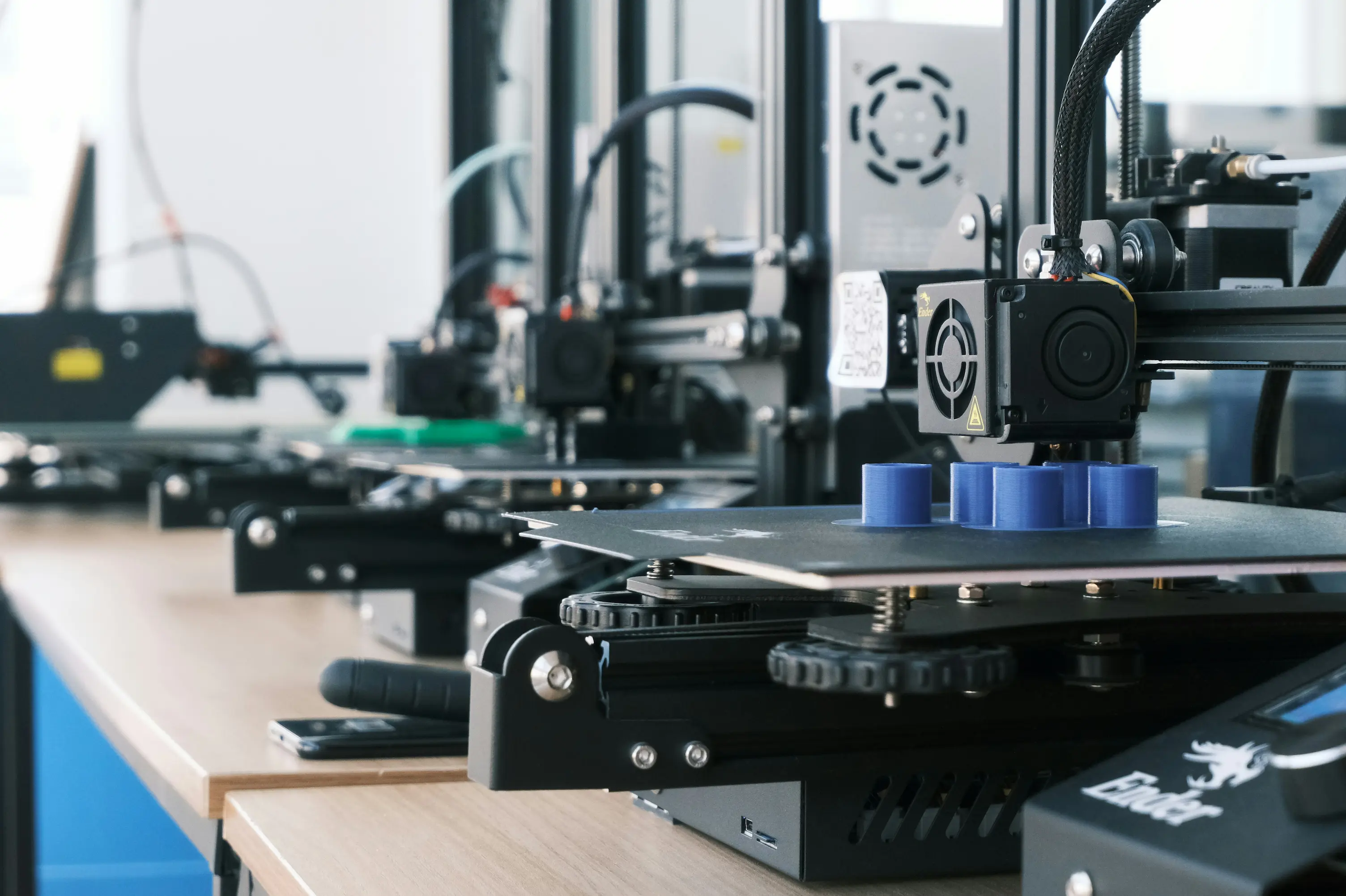
R&D Tax Credits for Additive Manufacturing
A company that has printed the same bracket the same way for multiple years in a row might not feel like it’s doing any research in the same way that a traditional manufacturer that added one metal printer to build a single part in-house may not, but both may be wrong in their assumptions.

Your Project Failed. What Does That Mean For Your R&D Tax Credit?
A failed project may still qualify for the R&D tax credit. The Treasury regulations state that the ultimate success or failure does not automatically qualify or disqualify whether its development costs count as research expenditures. Before you write off a shelved prototype, a scrapped software build, or a formulation that was never launched, find out whether the work behind it qualifies.