R&D Tax Credits for Biotech Companies

Summary: Biotech and pharmaceutical companies run research-intensive operations on a daily basis, making them highly qualified for research and development tax credits. Some of these companies, however, assume that only certain stages of product or drug development qualify, leading them to under-claim, or not investigate the credit at all. The IRS has issued guidance on how this industry’s research is evaluated, and understanding that guidance is imperative to biotech companies and their consideration of the R&D tax credit.
Introduction
Biotech maps onto the definition of R&D in a very direct way – arguably the most direct of any industry. Testing a new compound’s toxicity, running a clinical trial, or formulating a drug for a new delivery method all involve technical and uncertainty and experimentation that often meet the IRS’s guidance and the four-part test. Many biotech companies believe that because the research has taken multiple years, including various regulatory checkpoints, that their work may not qualify, but the IRS has addressed this issue.
Large Business & International guidance has walked through how examiners should evaluate pharmaceutical and biotech research credit claims, and when combined with the underlying statute, companies have a clearer picture of what qualifies.
Why Biotech Research Often Fits the Four-Part Test
Every activity included in an R&D tax credit claim must satisfy the four-part test laid out in IRC §41(d) and Treas. Reg. §1.41-4:
• Permitted Purpose: The activity must be intended to develop or improve the functionality, performance, reliability, or quality of a business component.
• Technological in Nature: The work must rely on engineering, physical or biological science, or computer science principles.
• Technical Uncertainty: The activity must be undertaken to discover information intended to eliminate uncertainty about the capability, method, or appropriate design of the business component.
• Process of Experimentation: Your team must have a process that evaluates alternatives through modeling, simulation, systematic trial and error, or other methods to eliminate uncertainty.
Biotech research tends to satisfy this test more cleanly than other industries, though every activity must distinguish between routine work and genuine experimentation, regardless of industry.
What Qualifies at Each Stage of Development
The drug and therapeutic development process moves through distinct phases, which is often where the confusion lies. The IRS’s guidelines address what parts of each stage may generate qualified research expenses.
Discovery and Preclinical Research
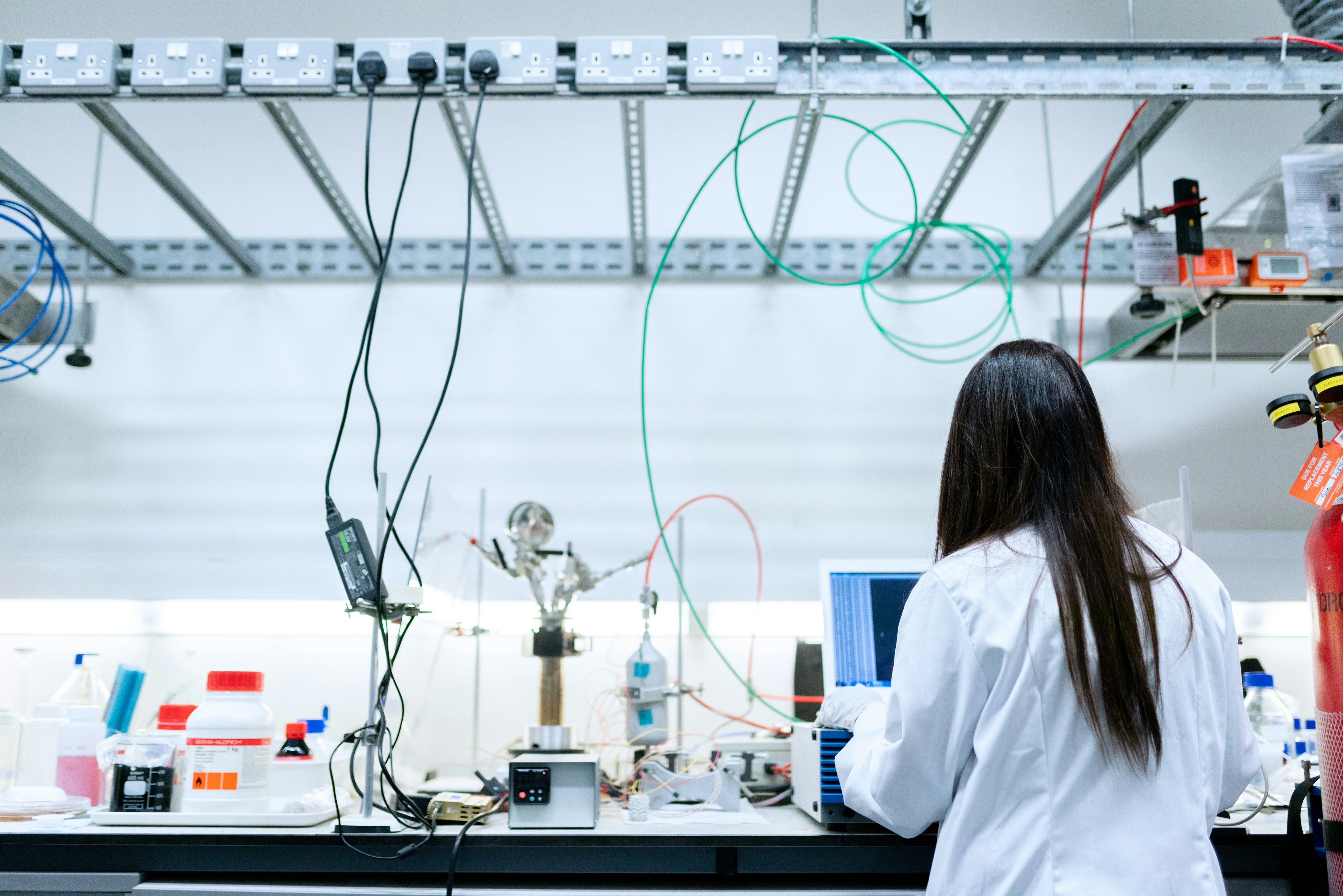
This is the category many people imagine when they picture R&D; work performed in biology, chemistry, pharmacology, and toxicology departments often carries the “white lab coat” image with it. These departments often perform qualifying work, including:
• Identifying and testing candidate compounds, including screening and synthesizing candidate molecules
• Assessing drug metabolism, testing efficacy and toxicity in vitro and in pilot models
• Evaluating safety and production feasibility of a compound before it moves into human testing
• Formulation work to determine delivery method, i.e. oral, topical, or injection
Clinical Trials
IRS guidance addresses that pharmaceutical and therapeutic biologic research has recognized the FDA-required, three-phase structure of human clinical trials as within the scope of qualified research.
• Phase I trials, typically involving a small group of healthy volunteers focusing on safety and dosage
• Phase II trials, which involve a larger patient population, often focused on efficacy and side effects
• Phase III trials, involving a much larger patient population, generating comprehensive safety and efficacy data required for approval
The guidance extends to clinical work required after an accelerated approval while the company continues gathering data to satisfy a confirmatory trial requirement.
Manufacturing and Process Development
Under IRC §41(d)(2)(C), a manufacturing or production process is treated as its own business component, separate from the product itself, and must independently satisfy the four-part test. Scaling a therapeutic from lab quantities to commercial product is its own distinct question; work to solve stability issues, improve the overall process, or enhance a process for large-scale synthesis may qualify, while routine production generally does not.
Supply Costs
Lab-intensive research runs through significant volumes of reagents, cell lines, and other consumables, and the good news is that the costs tied directly to the research itself are exactly what the credit is built to capture. The Second Circuit's decision in Union Carbide Corp. v. Commissioner, 697 F.3d 104 (2d Cir. 2012), shows where that line sits, even though the underlying research was industrial rather than biological. Union Carbide's testing happened alongside its normal manufacturing process, and the raw materials for that manufacturing would have been purchased and used whether any research took place. However, the court allowed the additional supply costs attributable to the research itself, such as the incremental materials and testing tied specifically to the experimentation, while excluding the baseline production costs the company would have incurred regardless.
That distinction works in a biotech company's favor. Reagents, cell lines, and other consumables used in genuinely experimental work, batches run to test a hypothesis, additional trial runs, materials used specifically for testing, are the exact costs the credit rewards. The task is separating that research-specific spend from the ordinary materials used in already-validated, routine production, so the full value of what qualifies makes it into the claim.
The Payroll Tax Offset for Pre-Revenue Biotech Startups
Biotech and early-stage pharmaceutical companies sometimes spend years in R&D before generating meaningful revenue, which has made the R&D tax credit less meaningful due to the lack of income tax liability to offset. IRC §41(h) addresses this directly by allowing a qualified small business to elect to apply some of the credit against payroll taxes instead.
To qualify, a company generally needs:
• Gross receipts under $5 million for the credit year
• No gross receipts for any tax year more than five years before the credit year
A qualifying business can apply up to $500,000 of its research credit against payroll tax liability each year, first offsetting the employer’s share of Social Security tax, with any remainder applied against the employer’s share of Medicare tax. For a pre-revenue biotech or pharma startup, this turns the credit into real, near-term cash instead of a deferred benefit from a tax return.
Building a Defensible Biotech R&D Credit Study
A biotech R&D credit claim is stronger with the proper documentation. The nature of drug development works in a company’s favor here as the regulated research generates documentation nearly automatically. Practical advice for organizing this documentation includes:
• Keeping lab notebook and electronic lab notebook records current and tied to specific projects
• Preserving IND submissions, study protocols, and IRB correspondence to show the uncertainty being addressed and the hypotheses being tested during different stages
• Retaining sponsored research agreements and licensing contracts to determine rights and payment terms for funded research treatments
• Separating supply costs tied to experimental batches from costs tied to validated, routine production runs
Frequently Asked Questions
Do clinical trials qualify for the R&D tax credit?
Yes, as long as they meet the four-part test, along with the continued trial work required to satisfy an accelerated approval.
Does research funded by a pharmaceutical partner or grant still qualify?
It depends on the contract. Research is excluded from the credit to the extent that it’s funded, which is tied to whether the company retains substantial rights to the results and whether payment is contingent on the research’s success. These terms need to be evaluated in each agreement.
Can a pre-revenue biotech startup benefit from the R&D tax credit?
Yes. A qualified small business, generally with under $5M in gross receipts and no gross receipts more than 5 years before the credit year, can elect to apply up to $500K of it’s research credit against the payroll taxes instead of income tax.
Do routine supplies count as qualified research expenses?
Only if the costs wouldn’t have been incurred without the research.
Is manufacturing scale-up work eligible separately from the drug itself?
Yes. A manufacturing or production process is treated as its own business component under IRC §41(d)(2)(C) and independently meets the four-part test.
How RK Partners Approaches Biotech R&D Credit Claims
Biotech companies often perform research that checks nearly every box the R&D tax credit was designed for, but it’s our job to make sure that we can identify qualified activities and costs properly, and help you document them in a way that stands up to IRS examination. Biotech and pharma companies have a specific set of rules on clinical trials, funded research, and supply costs, which demands a detailed and experienced eye.
We don’t take a generic approach to R&D tax credits for any company. We have experienced engineers, CPAs, and tax attorneys with combined decades of experience compiling credit claims for biotech companies. We know what to look for and how to document it, taking all the heavy lifting off of your team’s plate.
The first consultation is risk-free – we’d love to talk to you about the possibility of your company qualifying for R&D tax credits.
R&D Tax Credits for Biotech Companies
Summary: Biotech and pharmaceutical companies run research-intensive operations on a daily basis, making them highly qualified for research and development tax credits. Some of these companies, however, assume that only certain stages of product or drug development qualify, leading them to under-claim, or not investigate the credit at all. The IRS has issued guidance on how this industry’s research is evaluated, and understanding that guidance is imperative to biotech companies and their consideration of the R&D tax credit.
Introduction
Biotech maps onto the definition of R&D in a very direct way – arguably the most direct of any industry. Testing a new compound’s toxicity, running a clinical trial, or formulating a drug for a new delivery method all involve technical and uncertainty and experimentation that often meet the IRS’s guidance and the four-part test. Many biotech companies believe that because the research has taken multiple years, including various regulatory checkpoints, that their work may not qualify, but the IRS has addressed this issue.
Large Business & International guidance has walked through how examiners should evaluate pharmaceutical and biotech research credit claims, and when combined with the underlying statute, companies have a clearer picture of what qualifies.
Why Biotech Research Often Fits the Four-Part Test
Every activity included in an R&D tax credit claim must satisfy the four-part test laid out in IRC §41(d) and Treas. Reg. §1.41-4:
• Permitted Purpose: The activity must be intended to develop or improve the functionality, performance, reliability, or quality of a business component.
• Technological in Nature: The work must rely on engineering, physical or biological science, or computer science principles.
• Technical Uncertainty: The activity must be undertaken to discover information intended to eliminate uncertainty about the capability, method, or appropriate design of the business component.
• Process of Experimentation: Your team must have a process that evaluates alternatives through modeling, simulation, systematic trial and error, or other methods to eliminate uncertainty.
Biotech research tends to satisfy this test more cleanly than other industries, though every activity must distinguish between routine work and genuine experimentation, regardless of industry.
What Qualifies at Each Stage of Development
The drug and therapeutic development process moves through distinct phases, which is often where the confusion lies. The IRS’s guidelines address what parts of each stage may generate qualified research expenses.
Discovery and Preclinical Research
This is the category many people imagine when they picture R&D; work performed in biology, chemistry, pharmacology, and toxicology departments often carries the “white lab coat” image with it. These departments often perform qualifying work, including:
• Identifying and testing candidate compounds, including screening and synthesizing candidate molecules
• Assessing drug metabolism, testing efficacy and toxicity in vitro and in pilot models
• Evaluating safety and production feasibility of a compound before it moves into human testing
• Formulation work to determine delivery method, i.e. oral, topical, or injection
Clinical Trials
IRS guidance addresses that pharmaceutical and therapeutic biologic research has recognized the FDA-required, three-phase structure of human clinical trials as within the scope of qualified research.
• Phase I trials, typically involving a small group of healthy volunteers focusing on safety and dosage
• Phase II trials, which involve a larger patient population, often focused on efficacy and side effects
• Phase III trials, involving a much larger patient population, generating comprehensive safety and efficacy data required for approval
The guidance extends to clinical work required after an accelerated approval while the company continues gathering data to satisfy a confirmatory trial requirement.
Manufacturing and Process Development
Under IRC §41(d)(2)(C), a manufacturing or production process is treated as its own business component, separate from the product itself, and must independently satisfy the four-part test. Scaling a therapeutic from lab quantities to commercial product is its own distinct question; work to solve stability issues, improve the overall process, or enhance a process for large-scale synthesis may qualify, while routine production generally does not.
Supply Costs
Lab-intensive research runs through significant volumes of reagents, cell lines, and other consumables, and the good news is that the costs tied directly to the research itself are exactly what the credit is built to capture. The Second Circuit's decision in Union Carbide Corp. v. Commissioner, 697 F.3d 104 (2d Cir. 2012), shows where that line sits, even though the underlying research was industrial rather than biological. Union Carbide's testing happened alongside its normal manufacturing process, and the raw materials for that manufacturing would have been purchased and used whether any research took place. However, the court allowed the additional supply costs attributable to the research itself, such as the incremental materials and testing tied specifically to the experimentation, while excluding the baseline production costs the company would have incurred regardless.
That distinction works in a biotech company's favor. Reagents, cell lines, and other consumables used in genuinely experimental work, batches run to test a hypothesis, additional trial runs, materials used specifically for testing, are the exact costs the credit rewards. The task is separating that research-specific spend from the ordinary materials used in already-validated, routine production, so the full value of what qualifies makes it into the claim.
The Payroll Tax Offset for Pre-Revenue Biotech Startups
Biotech and early-stage pharmaceutical companies sometimes spend years in R&D before generating meaningful revenue, which has made the R&D tax credit less meaningful due to the lack of income tax liability to offset. IRC §41(h) addresses this directly by allowing a qualified small business to elect to apply some of the credit against payroll taxes instead.
To qualify, a company generally needs:
• Gross receipts under $5 million for the credit year
• No gross receipts for any tax year more than five years before the credit year
A qualifying business can apply up to $500,000 of its research credit against payroll tax liability each year, first offsetting the employer’s share of Social Security tax, with any remainder applied against the employer’s share of Medicare tax. For a pre-revenue biotech or pharma startup, this turns the credit into real, near-term cash instead of a deferred benefit from a tax return.
Building a Defensible Biotech R&D Credit Study
A biotech R&D credit claim is stronger with the proper documentation. The nature of drug development works in a company’s favor here as the regulated research generates documentation nearly automatically. Practical advice for organizing this documentation includes:
• Keeping lab notebook and electronic lab notebook records current and tied to specific projects
• Preserving IND submissions, study protocols, and IRB correspondence to show the uncertainty being addressed and the hypotheses being tested during different stages
• Retaining sponsored research agreements and licensing contracts to determine rights and payment terms for funded research treatments
• Separating supply costs tied to experimental batches from costs tied to validated, routine production runs
Frequently Asked Questions
Do clinical trials qualify for the R&D tax credit?
Yes, as long as they meet the four-part test, along with the continued trial work required to satisfy an accelerated approval.
Does research funded by a pharmaceutical partner or grant still qualify?
It depends on the contract. Research is excluded from the credit to the extent that it’s funded, which is tied to whether the company retains substantial rights to the results and whether payment is contingent on the research’s success. These terms need to be evaluated in each agreement.
Can a pre-revenue biotech startup benefit from the R&D tax credit?
Yes. A qualified small business, generally with under $5M in gross receipts and no gross receipts more than 5 years before the credit year, can elect to apply up to $500K of it’s research credit against the payroll taxes instead of income tax.
Do routine supplies count as qualified research expenses?
Only if the costs wouldn’t have been incurred without the research.
Is manufacturing scale-up work eligible separately from the drug itself?
Yes. A manufacturing or production process is treated as its own business component under IRC §41(d)(2)(C) and independently meets the four-part test.
How RK Partners Approaches Biotech R&D Credit Claims
Biotech companies often perform research that checks nearly every box the R&D tax credit was designed for, but it’s our job to make sure that we can identify qualified activities and costs properly, and help you document them in a way that stands up to IRS examination. Biotech and pharma companies have a specific set of rules on clinical trials, funded research, and supply costs, which demands a detailed and experienced eye.
We don’t take a generic approach to R&D tax credits for any company. We have experienced engineers, CPAs, and tax attorneys with combined decades of experience compiling credit claims for biotech companies. We know what to look for and how to document it, taking all the heavy lifting off of your team’s plate.
The first consultation is risk-free – we’d love to talk to you about the possibility of your company qualifying for R&D tax credits.