R&D Tax Credits for Medical Devices

Summary
Medical device companies invest heavily in innovation, and certain qualified activities related to investment may generate a for dollar-for-dollar research and development (R&D) tax credits under the Internal Revenue Code (IRC) §41.
Product design, prototyping, biocompatibility testing, software development, and FDA-driven engineering work are all strong candidates for R&D tax credit qualification.
Not all FDA-related activities automatically qualify, however. The credit depends on technical uncertainty and experimentation, not regulatory compliance alone.
Medical Device Development is Built on Qualified Research
Developing a medical device is inherently an iterative process. A clinical problem is identified, a solution hypothesized, prototype built and tested. Failures lead to new iterations and further tests. Materials are evaluated for biocompatibility, firmware is written and rewritten, components continue to be redesigned to meet performance specifications that weren’t achievable in the last version.
This process of elimination of technical uncertainty through systematic experimentation is exactly what the R&D tax credit IRC §41 was designed to reward. For medical device companies, the credit isn’t a peripheral tax planning strategy. It’s a direct offset against the cost of doing the core work of the business.
Many device companies, especially small manufacturers or early-stage developers tend to underutilize the credit because they either assume it doesn’t apply to their specific work or because they’ve never had someone look closely enough at what may qualify.
What Activities Qualify?
Under IRC §41(d)(1), activities must pass the four-part test to constitute qualified research:
• Permitted Purpose: The activity must be aimed at developing or improving a product or process.
• Technological in Nature: The work must rely on engineering, physical or biological science, or computer science principles.
• Technical Uncertainty: The activity must involve a genuine technical uncertainty about whether the developers are capable or do not know the best method to achieve a goal.
• Process of Experimentation: Your team must have a process that is capable of testing alternatives evaluating approaches.
Medical device companies may see this in practice in the following ways:
New Product Design and Engineering
Designing a new medical device, or meaningfully improving an existing one, is a highly complex and research-intensive activity. This may include:
- Hardware design (mechanical, electrical, or electromechanical)
- Software and firmware development embedded in the device
- Sensor integration
- Engineering of device components to meet performance or safety specifications
Whether a particular design will achieve the required clinical performance is often unknown until prototypes are built and tested, which is exactly what the R&D tax credit is designed for.
Prototyping and Bench Testing
Building prototypes and running bench tests to evaluate design alternatives is a core qualifying activity. The process of experimentation requirement under Treas. Reg. §1.41-4(a)(3) requires that the process be evaluative and generally capable of testing one or more alternative, which is precisely what iterative prototype testing does. Critically, the project does not need to be successful in order to qualify. A failed prototype that informs the next iteration is still an element of a process of experimentation.
Biocompatibility and Materials Research
Evaluating new materials for structural, chemical, or biological performance in a clinical environment is qualifying research. This includes testing new polymers, metals, coatings, or composites for their mechanical properties, corrosion resistance, or biocompatibility with human tissues. When the outcome of that is not predetermined, the technical uncertainty is present, and the reliance on the materials science and biology satisfies the “technological in nature” requirement.
Software and Firmware Development
Medical devices increasingly rely on embedded software and firmware, and the development of that software can generate substantial qualified research expenses. This can include:
- Writing control algorithms
- Developing a user interface for a diagnostic tool
- Building connectivity protocols for remote monitoring
- Engineering cybersecurity features into a networking device
FDA-Driven Engineering and Regulatory Validation
Not all FDA-related activities automatically qualify. Routine compliance testing that confirms a device meets an already-known specification is not qualified research. But engineering changes required by evolving FDA guidance, redesigns in response to deficiencies identified during premarket review, or clinical validation work that involves resolving technical uncertainties about device performance may qualify. The distinction is between testing that confirms and testing that discovers. The former is quality control. The latter is experimentation.
Manufacturing Process Innovation
R&D tax credits are not limited to the device itself. The process used to manufacture it is a separate business component under IRC §41(d)(2)(B), and improving that process can qualify separately. This may include:
- Developing a new sterilization protocol
- Integrating automation or robotics into an assembly process
- Engineering a new qualify-validated manufacturing method
- Optimizing a production process to achieve tighter dimensional tolerances through systematic trials
Any plant process or technique for commercial production of a device is treated as a separate business component under the statute, meaning the process and product are evaluated independently.
What Doesn’t Qualify
Understanding the exclusions is just as important as identifying qualifying activities. Under IRC §41(d)(4), the following are not qualified research regardless of how they’re characterized:
- Routine quality control testing or inspection against pre-established acceptance criteria
- Adapting an existing device to specific customer’s requirements without resolving new technical uncertainty
- Research conducted outside the United States
- Research funded by a government grant, National Institute of Health (NIH) contract, or any third party that retains rights to the results and bears the economic risk
- Post-commercial production activities that don’t involve new technical uncertainty
The funded research exclusion deserves particular attention for device companies that receive NIH grants to conduct research under government contracts. If the funding entity retains substantial rights to the research results or bears the financial risk of the research, the work may be excluded from the credit under IRC §41(d)(4)(H). The analysis is fact-specific and should be reviewed by an R&D tax credit specialist.
What Expenses Qualify?
Once qualifying activities are identified, Qualified Research Expenses under IRC §41(b) in a medical device context typically include:
- Engineer and scientist wages: Mechanical, electrical, biomedical, and software engineers directly performing or supervising qualifying work, as well as support staff whose time is directly tied to qualifying activities. Under Treasury regulations, employees whose time is at least 80% spent on qualifying activities can have 100% of their wages counted.
- Prototype and test materials: Biocompatible polymers, metals, coatings, electronic components, and other supplies consumed in prototype development and testing.
- Contract research: 65% of amounts paid to outside labs, contract research organizations (CROs), or independent engineers performing qualified research or testing on your behalf, provided your company retains substantial rights to the results and bears the economic risk. It should be noted that only contract research performed in the United States will be qualified.
Documentation
Medical device companies often generate high-quality engineering documentation as part of their design and control processes, including design history files, verification and validation protocols, test reports, and change orders. That’s a large advantage when it comes to substantiating R&D tax credits.
If these notes aren’t organized in a perfect way, however, working with an R&D tax credit expert will be immensely helpful. RK Partners can take the burden of that task off your team; they are experienced in knowing exactly what to look for and how to compile a defensible claim out of the documentation and notes you do have.
What RK Partners Can Do for You
R&D tax credits are one of the most significant incentives available to medical device companies, and one of the most commonly under-claimed. RK Partners works exclusively in this area, which makes us highly intuitive at finding qualifying activities across the full development cycle, from feasibility through design verification, and how to build documentation that connects engineering work to a defensible credit position.
We have a 100% success rate, and have identified credits that were previously uncovered by other CPAs or advisors. If your team is developing, improving, or engineering medical devices, you should reach out for a no-risk consultation with us as soon as possible.
R&D Tax Credits for Medical Devices
Summary
Medical device companies invest heavily in innovation, and certain qualified activities related to investment may generate a for dollar-for-dollar research and development (R&D) tax credits under the Internal Revenue Code (IRC) §41.
Product design, prototyping, biocompatibility testing, software development, and FDA-driven engineering work are all strong candidates for R&D tax credit qualification.
Not all FDA-related activities automatically qualify, however. The credit depends on technical uncertainty and experimentation, not regulatory compliance alone.
Medical Device Development is Built on Qualified Research
Developing a medical device is inherently an iterative process. A clinical problem is identified, a solution hypothesized, prototype built and tested. Failures lead to new iterations and further tests. Materials are evaluated for biocompatibility, firmware is written and rewritten, components continue to be redesigned to meet performance specifications that weren’t achievable in the last version.
This process of elimination of technical uncertainty through systematic experimentation is exactly what the R&D tax credit IRC §41 was designed to reward. For medical device companies, the credit isn’t a peripheral tax planning strategy. It’s a direct offset against the cost of doing the core work of the business.
Many device companies, especially small manufacturers or early-stage developers tend to underutilize the credit because they either assume it doesn’t apply to their specific work or because they’ve never had someone look closely enough at what may qualify.
What Activities Qualify?
Under IRC §41(d)(1), activities must pass the four-part test to constitute qualified research:
• Permitted Purpose: The activity must be aimed at developing or improving a product or process.
• Technological in Nature: The work must rely on engineering, physical or biological science, or computer science principles.
• Technical Uncertainty: The activity must involve a genuine technical uncertainty about whether the developers are capable or do not know the best method to achieve a goal.
• Process of Experimentation: Your team must have a process that is capable of testing alternatives evaluating approaches.
Medical device companies may see this in practice in the following ways:
New Product Design and Engineering
Designing a new medical device, or meaningfully improving an existing one, is a highly complex and research-intensive activity. This may include:
- Hardware design (mechanical, electrical, or electromechanical)
- Software and firmware development embedded in the device
- Sensor integration
- Engineering of device components to meet performance or safety specifications
Whether a particular design will achieve the required clinical performance is often unknown until prototypes are built and tested, which is exactly what the R&D tax credit is designed for.
Prototyping and Bench Testing
Building prototypes and running bench tests to evaluate design alternatives is a core qualifying activity. The process of experimentation requirement under Treas. Reg. §1.41-4(a)(3) requires that the process be evaluative and generally capable of testing one or more alternative, which is precisely what iterative prototype testing does. Critically, the project does not need to be successful in order to qualify. A failed prototype that informs the next iteration is still an element of a process of experimentation.
Biocompatibility and Materials Research
Evaluating new materials for structural, chemical, or biological performance in a clinical environment is qualifying research. This includes testing new polymers, metals, coatings, or composites for their mechanical properties, corrosion resistance, or biocompatibility with human tissues. When the outcome of that is not predetermined, the technical uncertainty is present, and the reliance on the materials science and biology satisfies the “technological in nature” requirement.
Software and Firmware Development
Medical devices increasingly rely on embedded software and firmware, and the development of that software can generate substantial qualified research expenses. This can include:
- Writing control algorithms
- Developing a user interface for a diagnostic tool
- Building connectivity protocols for remote monitoring
- Engineering cybersecurity features into a networking device
FDA-Driven Engineering and Regulatory Validation
Not all FDA-related activities automatically qualify. Routine compliance testing that confirms a device meets an already-known specification is not qualified research. But engineering changes required by evolving FDA guidance, redesigns in response to deficiencies identified during premarket review, or clinical validation work that involves resolving technical uncertainties about device performance may qualify. The distinction is between testing that confirms and testing that discovers. The former is quality control. The latter is experimentation.
Manufacturing Process Innovation
R&D tax credits are not limited to the device itself. The process used to manufacture it is a separate business component under IRC §41(d)(2)(B), and improving that process can qualify separately. This may include:
- Developing a new sterilization protocol
- Integrating automation or robotics into an assembly process
- Engineering a new qualify-validated manufacturing method
- Optimizing a production process to achieve tighter dimensional tolerances through systematic trials
Any plant process or technique for commercial production of a device is treated as a separate business component under the statute, meaning the process and product are evaluated independently.
What Doesn’t Qualify
Understanding the exclusions is just as important as identifying qualifying activities. Under IRC §41(d)(4), the following are not qualified research regardless of how they’re characterized:
- Routine quality control testing or inspection against pre-established acceptance criteria
- Adapting an existing device to specific customer’s requirements without resolving new technical uncertainty
- Research conducted outside the United States
- Research funded by a government grant, National Institute of Health (NIH) contract, or any third party that retains rights to the results and bears the economic risk
- Post-commercial production activities that don’t involve new technical uncertainty
The funded research exclusion deserves particular attention for device companies that receive NIH grants to conduct research under government contracts. If the funding entity retains substantial rights to the research results or bears the financial risk of the research, the work may be excluded from the credit under IRC §41(d)(4)(H). The analysis is fact-specific and should be reviewed by an R&D tax credit specialist.
What Expenses Qualify?
Once qualifying activities are identified, Qualified Research Expenses under IRC §41(b) in a medical device context typically include:
- Engineer and scientist wages: Mechanical, electrical, biomedical, and software engineers directly performing or supervising qualifying work, as well as support staff whose time is directly tied to qualifying activities. Under Treasury regulations, employees whose time is at least 80% spent on qualifying activities can have 100% of their wages counted.
- Prototype and test materials: Biocompatible polymers, metals, coatings, electronic components, and other supplies consumed in prototype development and testing.
- Contract research: 65% of amounts paid to outside labs, contract research organizations (CROs), or independent engineers performing qualified research or testing on your behalf, provided your company retains substantial rights to the results and bears the economic risk. It should be noted that only contract research performed in the United States will be qualified.
Documentation
Medical device companies often generate high-quality engineering documentation as part of their design and control processes, including design history files, verification and validation protocols, test reports, and change orders. That’s a large advantage when it comes to substantiating R&D tax credits.
If these notes aren’t organized in a perfect way, however, working with an R&D tax credit expert will be immensely helpful. RK Partners can take the burden of that task off your team; they are experienced in knowing exactly what to look for and how to compile a defensible claim out of the documentation and notes you do have.
What RK Partners Can Do for You
R&D tax credits are one of the most significant incentives available to medical device companies, and one of the most commonly under-claimed. RK Partners works exclusively in this area, which makes us highly intuitive at finding qualifying activities across the full development cycle, from feasibility through design verification, and how to build documentation that connects engineering work to a defensible credit position.
We have a 100% success rate, and have identified credits that were previously uncovered by other CPAs or advisors. If your team is developing, improving, or engineering medical devices, you should reach out for a no-risk consultation with us as soon as possible.
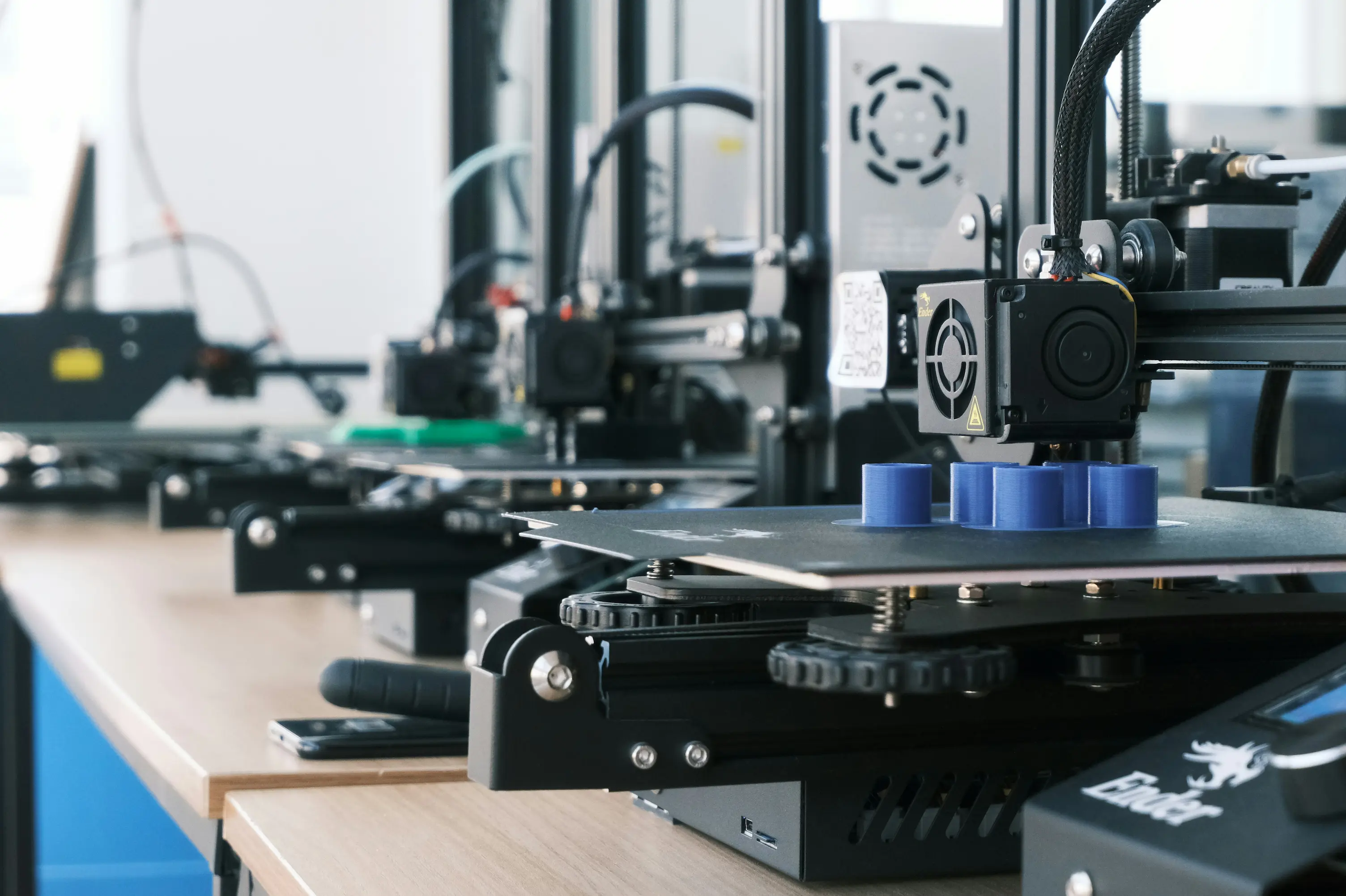
R&D Tax Credits for Additive Manufacturing
A company that has printed the same bracket the same way for multiple years in a row might not feel like it’s doing any research in the same way that a traditional manufacturer that added one metal printer to build a single part in-house may not, but both may be wrong in their assumptions.

Your Project Failed. What Does That Mean For Your R&D Tax Credit?
A failed project may still qualify for the R&D tax credit. The Treasury regulations state that the ultimate success or failure does not automatically qualify or disqualify whether its development costs count as research expenditures. Before you write off a shelved prototype, a scrapped software build, or a formulation that was never launched, find out whether the work behind it qualifies.