R&D Tax Credits for Timberland and Forest Management Companies

How the R&D Tax Credit Applies to Forestry Industry
The federal research credit is available to any qualifying company, regardless of the industry they fall under. The requirements revolve around whether they’re working toward resolving genuine uncertainty through testing. It doesn’t require a lab, overly scientific documentation, or a formal research department. If the activity meets the four-part test defined under IRC §41, the industry is of no consequence.
• Permitted Purpose: The activity must be intended to develop or improve the functionality, performance, reliability, or quality of a business component.
• Technological in Nature: The work must rely on engineering, physical or biological science, or computer science principles.
• Technical Uncertainty: The activity must be undertaken to discover information intended to eliminate uncertainty about the capability, method, or appropriate design of the business component.
• Process of Experimentation: Your team must have a process that evaluates alternatives through modeling, simulation, systematic trial and error, or other methods to eliminate uncertainty.
Forest management gets overlooked because at a high level, the work reads as land stewardship, not science. This is a mistake; much of the industry is performing qualifying activities quite often.
Forestry Industry Activities That May Qualify for R&D Tax Credits
Tree Genetics
Tree improvement programs plant different families of trees side by side, measure how each one grows and survives over many years, and use those results to choose the parents for the next generation. Activities that may qualify include:
• Breeding for disease and pest resistance, or wood density and quality traits
• Tissue culture and clonal propagation work to establish a stand faster and more uniformly than natural seeding allows
• Running progeny trials, where seedlings from controlled crosses are planted on multiple sites and measured for survival rate wood quality to rank the parent trees
• Using genetic markers to predict which seedlings will perform best, then testing those predictions against field results
Precision Forestry
Precision forestry is one of the newer and fastest growing categories of qualifying work in this space. Activities that may qualify include:
• Developing Light Detection and Ranging (LiDAR) and drone-based forest inventory systems to measure tree health and stand density more accurately than ground surveys
• Building remote sensing and Geographic Information System (GIS) models to log post-harvest planting data, tracking species mixes, survival rates, and site preparation progress
• Developing wildfire risk models based on fuel load, weather, and terrain, and validating the models against real conditions
Other Forestry Activities
Silviculture research covers a wide range of trial-based work outside genetics and technology. Other activities that may qualify include:
• Experimenting with spacing, thinning schedules, fertilization programs, or site preparation methods
• Developing harvesting scheduling optimization across a land base using new modeling approaches
• Trialing new regeneration or site-prep methods on land with different soil or terrain conditions
• Use GIS software to model erosion risk and analyze how land management affects downstream water purity
Manufacturing and Materials in Forestry R&D
Many timberland owners also operate mills, and the conversation often stops at the forestry growth, and not the postharvest.[IM3.1][L3.2] The manufacturing side, including turning logs into engineered wood, pulp, paper, and packaging, has the potential to generate qualifying research of its own, sometimes even more so than on the forestry side. Some examples of this include:
• Experimenting with adhesive bonding, lamination pressure, and press time to improve the strength and reliability of engineered wood and mass timber panels, and developing structural grading methods for lumber species not traditionally graded that way
• Formulating formaldehyde-free or bio-based adhesives and resins, including lignin-based formulations, to replace existing bonding chemistry in panel products
• Improving pulping and papermaking processes, including recovery loop efficiency, lime kiln alternatives, and fiber bonding and sheet formation work aimed at cutting energy use or improving output
• Developing new coatings, barrier materials, or specialty papers, including grease-resistant, water-resistant, or smart packaging substrates, for new product applications
• Converting wood fiber and mill byproducts into new materials or energy, including nanocellulose-based composites and biomass-to-energy conversion
A company that owns both a timberland and mill is often running two qualifying research programs at the same time, making it worth investigating the potential for qualifying activities across the whole organization, not just one piece of it.
What Does Not Qualify for R&D Tax Credits?
As with any credit claim in any industry, there is a clear line of what will not qualify. In the forestry industry, some examples of non-qualifying activities are:
• Routine forest management performed the same way it’s always been performed, without testing a new approach
• Land acquisition, appraisal, and any other purely financial or administrative activities
• Research conducted outside the U.S.
• Research funded by another party, such as a grant or cost-share arrangement where the company doesn’t have economic risk or retain rights to the results
Documentation Best Practices
Overly scientific documentation is not always a necessity, though as with all credit claims, there are best practices. Field trial records, breeding program notes, and model validation results are all helpful.
It’s also important to note that if your company participates in a university tree improvement cooperative, both your contribution and your internal research time should be documented separately, as the two are often treated differently under the funded research rules.
Working With an Advisor on Forestry R&D Tax Credits
Though timberland ownership has grown over the past several years, and the technical sophistication of the work, genetics, remote sensing, and predictive modeling has grown with it, very little of the spend currently shows up in R&D tax credit claims according to the IRS. If your company manages timberland, a mill, or both, it’s worth finding out if your activities qualify. Risk-free consultations take under thirty minutes to start, and you may find that your company is performing activities that qualify for R&D tax credits.
R&D Tax Credits for Timberland and Forest Management Companies
How the R&D Tax Credit Applies to Forestry Industry
The federal research credit is available to any qualifying company, regardless of the industry they fall under. The requirements revolve around whether they’re working toward resolving genuine uncertainty through testing. It doesn’t require a lab, overly scientific documentation, or a formal research department. If the activity meets the four-part test defined under IRC §41, the industry is of no consequence.
• Permitted Purpose: The activity must be intended to develop or improve the functionality, performance, reliability, or quality of a business component.
• Technological in Nature: The work must rely on engineering, physical or biological science, or computer science principles.
• Technical Uncertainty: The activity must be undertaken to discover information intended to eliminate uncertainty about the capability, method, or appropriate design of the business component.
• Process of Experimentation: Your team must have a process that evaluates alternatives through modeling, simulation, systematic trial and error, or other methods to eliminate uncertainty.
Forest management gets overlooked because at a high level, the work reads as land stewardship, not science. This is a mistake; much of the industry is performing qualifying activities quite often.
Forestry Industry Activities That May Qualify for R&D Tax Credits
Tree Genetics
Tree improvement programs plant different families of trees side by side, measure how each one grows and survives over many years, and use those results to choose the parents for the next generation. Activities that may qualify include:
• Breeding for disease and pest resistance, or wood density and quality traits
• Tissue culture and clonal propagation work to establish a stand faster and more uniformly than natural seeding allows
• Running progeny trials, where seedlings from controlled crosses are planted on multiple sites and measured for survival rate wood quality to rank the parent trees
• Using genetic markers to predict which seedlings will perform best, then testing those predictions against field results
Precision Forestry
Precision forestry is one of the newer and fastest growing categories of qualifying work in this space. Activities that may qualify include:
• Developing Light Detection and Ranging (LiDAR) and drone-based forest inventory systems to measure tree health and stand density more accurately than ground surveys
• Building remote sensing and Geographic Information System (GIS) models to log post-harvest planting data, tracking species mixes, survival rates, and site preparation progress
• Developing wildfire risk models based on fuel load, weather, and terrain, and validating the models against real conditions
Other Forestry Activities
Silviculture research covers a wide range of trial-based work outside genetics and technology. Other activities that may qualify include:
• Experimenting with spacing, thinning schedules, fertilization programs, or site preparation methods
• Developing harvesting scheduling optimization across a land base using new modeling approaches
• Trialing new regeneration or site-prep methods on land with different soil or terrain conditions
• Use GIS software to model erosion risk and analyze how land management affects downstream water purity
Manufacturing and Materials in Forestry R&D
Many timberland owners also operate mills, and the conversation often stops at the forestry growth, and not the postharvest.[IM3.1][L3.2] The manufacturing side, including turning logs into engineered wood, pulp, paper, and packaging, has the potential to generate qualifying research of its own, sometimes even more so than on the forestry side. Some examples of this include:
• Experimenting with adhesive bonding, lamination pressure, and press time to improve the strength and reliability of engineered wood and mass timber panels, and developing structural grading methods for lumber species not traditionally graded that way
• Formulating formaldehyde-free or bio-based adhesives and resins, including lignin-based formulations, to replace existing bonding chemistry in panel products
• Improving pulping and papermaking processes, including recovery loop efficiency, lime kiln alternatives, and fiber bonding and sheet formation work aimed at cutting energy use or improving output
• Developing new coatings, barrier materials, or specialty papers, including grease-resistant, water-resistant, or smart packaging substrates, for new product applications
• Converting wood fiber and mill byproducts into new materials or energy, including nanocellulose-based composites and biomass-to-energy conversion
A company that owns both a timberland and mill is often running two qualifying research programs at the same time, making it worth investigating the potential for qualifying activities across the whole organization, not just one piece of it.
What Does Not Qualify for R&D Tax Credits?
As with any credit claim in any industry, there is a clear line of what will not qualify. In the forestry industry, some examples of non-qualifying activities are:
• Routine forest management performed the same way it’s always been performed, without testing a new approach
• Land acquisition, appraisal, and any other purely financial or administrative activities
• Research conducted outside the U.S.
• Research funded by another party, such as a grant or cost-share arrangement where the company doesn’t have economic risk or retain rights to the results
Documentation Best Practices
Overly scientific documentation is not always a necessity, though as with all credit claims, there are best practices. Field trial records, breeding program notes, and model validation results are all helpful.
It’s also important to note that if your company participates in a university tree improvement cooperative, both your contribution and your internal research time should be documented separately, as the two are often treated differently under the funded research rules.
Working With an Advisor on Forestry R&D Tax Credits
Though timberland ownership has grown over the past several years, and the technical sophistication of the work, genetics, remote sensing, and predictive modeling has grown with it, very little of the spend currently shows up in R&D tax credit claims according to the IRS. If your company manages timberland, a mill, or both, it’s worth finding out if your activities qualify. Risk-free consultations take under thirty minutes to start, and you may find that your company is performing activities that qualify for R&D tax credits.
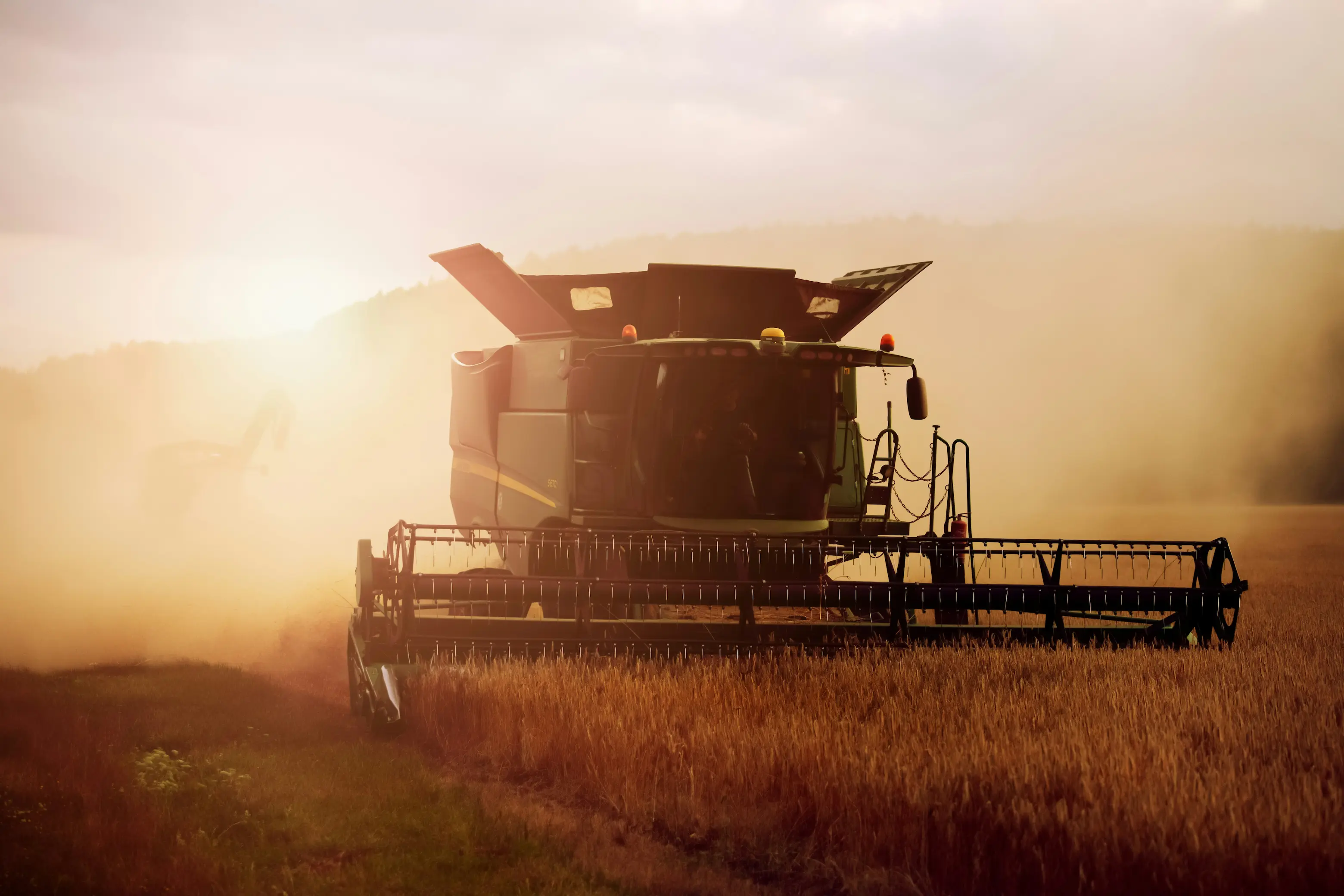
R&D Tax Credits for Postharvest Processors
Many agricultural operations don’t think that they’d qualify for R&D tax credits, and that’s not just reserved for farmers. It applies to other essential agriculture operations, such as grain elevator managers and postharvest processors.