Andy Sams
Chief Executive Officer

California runs its own R&D tax credit, separate from the federal one. If your team does qualifying research in the state, you may be able to claim both. Here is how the California credit works at a glance.
of qualified research expenses above a base amount. This is California's standard method.
of cash payments to qualified universities and scientific research organizations for basic research performed in California. Available to corporations, with a few exceptions.
of qualified expenses above 50% of your prior three-year average. If you had no expenses in one of those years, it is 1.3% of current-year expenses. New for 2025.
Unused credit carries forward until it is used up. It cannot be carried back to earlier years.
The credit offsets California tax only. A limited refund election exists for credit blocked by the temporary $5 million cap.
The Research Credit form goes in with your California return, and your CPA files it alongside your other returns.
California builds its credit on the federal one, so the work that earns the federal credit is where we start. If your team is working through a technical problem and testing different ways to solve it, that work may qualify.
The research has to happen in California. Work done in other states does not count toward the California credit.
Qualifying work has a permitted purpose (a new or improved product or process), relies on science or engineering, aims to eliminate technical uncertainty, and involves a process of experimentation. Those tests come from IRC Section 41(d).
New features, system architecture, algorithms, data pipelines, and performance or scalability work may qualify when the solution is not obvious up front.
Prototyping, testing, and design iteration for new or improved products may qualify, along with work to develop better production or lab processes.
Formulation, assay development, and preclinical research may qualify, and California adds its own rules for certain basic research payments.
California uses the federal definition of qualified research expenses under IRC Section 41(b). That covers wages for employees who do, supervise, or support the research, supplies used in the research, and 65% of what you pay outside contractors to do qualified research on your behalf.
California follows the federal credit with modifications. These are the rules worth knowing before you file.
Only research performed in California qualifies. If you do business in more than one state, the base calculation uses only gross receipts from products delivered or shipped to California customers. Companies with no California gross receipts should look at the alternative simplified credit.
For tax years beginning on or after January 1, 2024 and before January 1, 2027, business credits (carryovers included) cannot reduce your California tax by more than $5 million. Combined groups share one cap. Credit blocked by the cap can carry forward with an extended carryover period, or you can make an irrevocable election on a timely original return to receive it as a refundable credit, paid at 20% a year over five years starting in the third year after the election (Form FTB 3870). S corporations cannot make that election for entity-level credits.
Starting with tax years beginning in 2025, California follows the federal alternative simplified credit. You elect it on a timely filed original return, you cannot switch on an amended return, and revoking later takes FTB consent. The alternative incremental credit is repealed, so companies that used it before must choose the regular credit or the ASC for 2025.
The credit cannot reduce the minimum franchise tax or the alternative minimum tax. Unused credit carries forward until it is used, and it cannot be carried back.
S corporations can use only one-third of the credit against the 1.5% entity-level tax, but can pass 100% through to shareholders. Partnerships and LLCs allocate by distributive share. Members of a controlled group are treated as one taxpayer, and credit can be assigned within a combined reporting group on Form FTB 3544. Assigned credit cannot be reassigned.
Corporations can earn the 24% basic research credit on written-contract payments to qualified universities and scientific research organizations, for work performed in California. Biopharma and biotech companies have added rules for payments to qualified cancer centers and public university hospitals. Tangible property that qualifies for California's teleproduction and postproduction sales tax exemption is excluded from qualified expenses.
The California credit and the federal credit are separate claims, but they draw on the same research. Here is how they compare.
Because both credits start from the same definition of qualified research expenses, one set of technical interviews and one cost analysis can support both claims, and your CPA files them with your returns.
Your state and federal returns will not always match. California did not adopt the 2022 federal rule requiring research costs to be amortized, and it requires you to reduce your research deductions by the credit unless you elect a reduced credit. We work alongside your CPA to flag those differences up front.
We meet with your key staff to identify every qualifying project and disqualify any that don’t meet IRS criteria.
Our team reviews your payroll, general ledger, and tax returns to calculate the full credit.
A dedicated team with an impeccable IRS defense record reviews everything through our QA process.
You receive a complete, audit ready report that your CPA files alongside your taxes or amends for prior years.
Start with a no-obligation call to determine what your business could claim.
Chief Executive Officer
As the Chief Executive Officer at RK Partners, Andy brings two decades of experience across business structuring, private wealth, and operational leadership to the business. An award-winning Chartered Tax Adviser, he spent a decade at Deloitte, rising to leadership positions within the firm, before joining the creation of a global multi-family office, where he spent seven years scaling the business as senior partner of the firm responsible for its growth, strategic direction and operational excellence. Andy has not only advised entrepreneurs on everything from start-ups to global enterprises, but has personally experienced MBOs, capital raises, and business exits. He understands how to scale a business and help the people inside it keep and compound what they build.
At RK Partners, Andy is focused on deepening the firm's capabilities, scaling its operations, and ensuring clients continue to receive the same rigorous, high-touch service RK is known for as the business grows. Andy is drawn to businesses that combine real technical expertise with genuine client impact and sees R&D tax credits as an area where that combination matters more than ever.
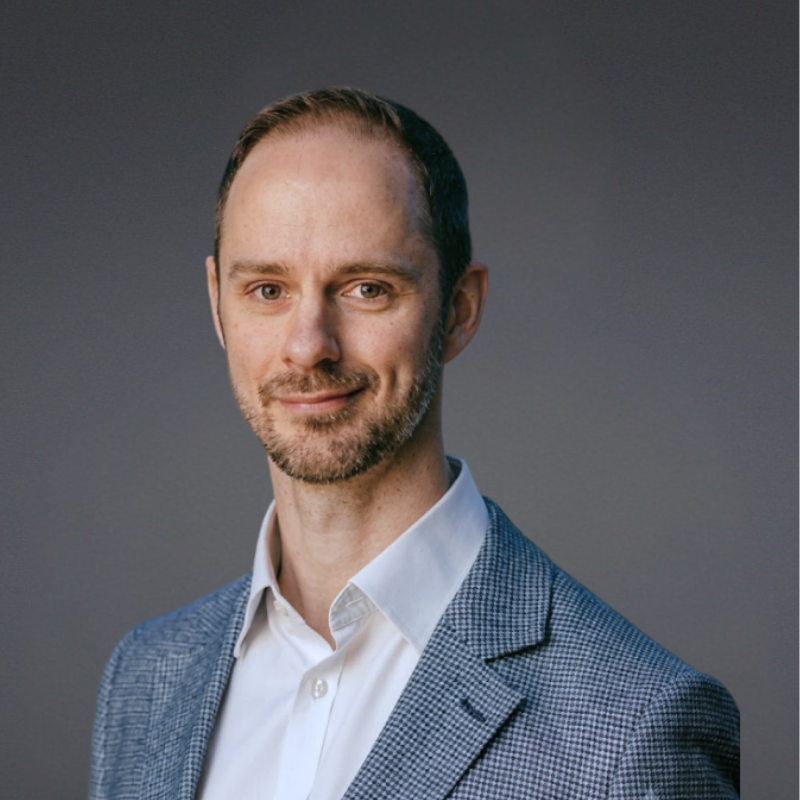
Chief Operating Officer, CPA
April is responsible for overseeing the entire operations of the business, as well as the R&D Tax Credit practice. A licensed CPA with a Master’s in Accounting, she brings over 12 years of specialized experience in R&D tax incentives, having worked across a broad range of industries and supported companies from early-stage startups to global Fortune 500s.
Before joining RK Partners, April held a Manager role at Deloitte, where she was instrumental in delivering over $700 million in R&D tax credits to her clients. Since joining RK, she has played a foundational role in building the firm’s consulting practice from the ground up - designing its technical approach, developing operational frameworks, and scaling a high-performing team of consultants.
Under her leadership, RK Partners has established a reputation for technical excellence, rigorous compliance, and meaningful client impact. April’s ability to bridge deep subject matter expertise with practical business acumen has made her a trusted advisor to clients and a cornerstone of the firm’s growth and delivery success.
.avif)
Chief Commercial Officer
With over 7 years of international experience in Tax Credits and Incentives, Sam leads the Commercial Team at RK Partners, where he combines sharp commercial acumen with strategic leadership. Throughout his career, he has helped a wide range of businesses unlock the full value of government incentives. While his client base spans multiple industries, he has developed particular expertise in Agriculture, Software, and Manufacturing.
At RK, Sam is responsible for driving the firm’s commercial strategy and leading all client engagement initiatives, ensuring clients and partners consistently receive exceptional value. Recognized for his deep industry knowledge, ability to build and scale high-performing teams, and his commitment to long-term client relationships, Sam is a trusted leader in an increasingly dynamic and competitive landscape.
.avif)
Chief Compliance Officer
Scott spent 19 years at Deloitte Tax in both the Research and Development Tax Credit Group and the Tax Controversy Group and has over 25 years’ experience with the Research Tax Credit. He represented Fortune 100 and 500 companies as well as much smaller clients during their IRS audits. He successfully resolved 55 cases at the Examination level and has not had even one case that went to IRS Appeals. The resolutions included amounts from a few hundred thousand to over 200 million.
At RK Partners, Scott leads the firm’s compliance and audit defense function. He directly oversees the training and development of our consulting team, ensuring they maintain a deep and current understanding of federal tax law, recent case law, and IRS examination trends. His rigorous approach to documentation, substantiation, and risk management safeguards our clients and reinforces the technical credibility of every claim we prepare.
.avif)
Chief Financial Officer
Randall Roisman's career in healthcare has spanned more than 20 years, including multiple C-level and VP/Executive-level finance and strategy roles in various large, complex, and well-respected health systems and healthcare providers in Southern California, in both for-profit and non-profit environments.
Throughout his career as a financial executive, Randall has consistently integrated his strategic vision and operational knowledge into his roles to grow organizations. He created and developed a transformative, industry-first joint venture partnership between a major integrated delivery health system and a leading national dental support organization (DSO) to build co-located medical and dental sites in which primary care and dental providers address the connection between oral and systemic health, provide patients with access to comprehensive healthcare focused on the health of the whole person, and reduce the total costs of care.
Randall also regularly assesses and implements operational improvements and efficiencies, revenue enhancement and business development opportunities, and cost containment and expense mitigation strategies.
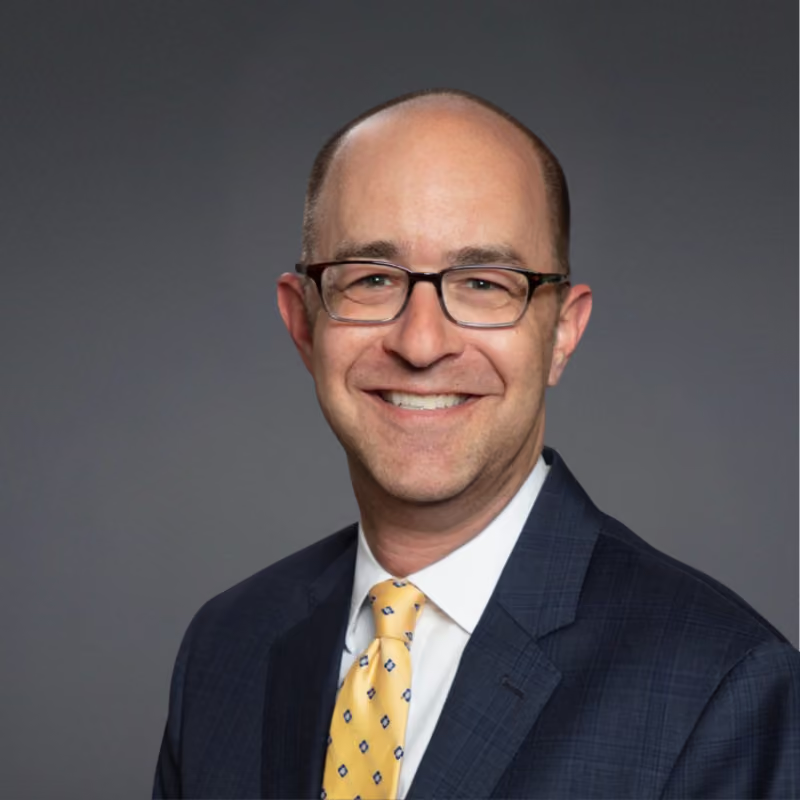
Founder & Chairman
Mark is the Founder of RK Partners; he is a serial entrepreneur with a focus on ventures at the intersection of tax incentives, technology, and consulting. With a strong background in commercial strategy and a track record of launching and scaling ventures, he has spent the past decade helping companies unlock hidden value through government incentives, while scaling high-performance teams across a range of industries.
Mark has led the firm from the ground up, growing RK into one of the most rapidly growing Tax Credits & Incentives consultancies in the US. Serving clients from high-growth startups through to large enterprises, Mark has played a hands-on role in building the firm’s commercial engine, operational structure, and leadership team – laying the foundational infrastructure for long-term success.
In his current role as Chairman, Mark is focused on shaping the strategy, vision and culture for the firm - ensuring RK continues to succeed at the highest level.